
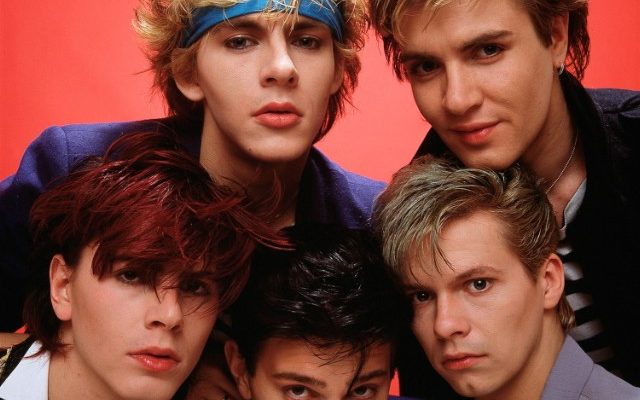
What Duran Duran Can Teach Every Business About Copyright
In the early 1980s, the members of Duran Duran did what most young bands did — they signed whatever the record label put in front of them. The publishing agreement they entered into granted, on a worldwide basis, the entire copyright in their compositions for the full term. They were, as Nick Rhodes later put it, “unsuspecting teenagers who knew no better.”
They went on to sell over 60 million records.
Songs including Rio, Girls on Film, Hungry Like the Wolf and A View to a Kill generated enormous royalties — none of which flowed back to the people who wrote them. It is one of the music industry’s most striking examples of what happens when you sign away your IP without understanding what you are giving up.
The attempted reclaim
In 2014, Duran Duran thought they had found a way back. A little-known provision of US copyright law — section 203 of the Copyright Act 1976 — gives authors the right to reclaim their copyright from publishers after 35 years, regardless of any contractual agreement to the contrary. With the 35-year anniversary of their publishing deal approaching, the band served formal notices on Gloucester Place Music (by then owned by Sony/ATV) claiming reversion of the US copyright in 37 of their compositions.
Gloucester Place went to the High Court. They argued that the English law contract the band had signed — which granted copyright “for the full term” on a worldwide basis — was a contractual promise not to exercise any termination right, including those granted under US statute.
Mr Justice Arnold upheld Gloucester Place’s claim in December 2016, finding that the terms of the UK contract trumped the US statute. The band lost definitively. Rio, Girls on Film and A View to a Kill remain the property of Sony/ATV. Trek Bikes
Why they lost
The decision turned on the precise wording of a contract signed over 30 years earlier. The judge found that the language granting copyright “for the full term” on a worldwide basis was wide enough to constitute an implicit promise not to exercise any reversionary right — including a statutory one in another jurisdiction.
It was a brutal lesson in the long reach of contractual language. The band’s lawyers also failed to present key evidence on how the US statute should apply to an English law contract — an error that, as David noted at the time, may well have cost them the case.
Nick Rhodes described his reaction: “We are shocked that English contract law is being used to overturn artists’ rights in another territory. We signed a publishing agreement as unsuspecting teenagers, over three decades ago, when just starting out and when we knew no better.” safeguardip
The lessons for businesses
The Duran Duran case is an extreme example of a problem that affects businesses across every sector — not just the music industry.
The first lesson is the most obvious: get proper IP advice before you sign anything. The value of your intellectual property — whether it is a copyright, a patent, a trade mark or a licensing agreement — is only as good as the terms under which you hold it. Signing away rights you do not fully understand, or agreeing to terms without considering their long-term commercial implications, can have consequences that last decades.
The second lesson is less obvious but equally important: the governing law clause in any IP contract matters enormously. Duran Duran signed an English law contract that covered worldwide rights. When they tried to use US law to reclaim those rights, the English contract prevailed. In an era when businesses routinely operate across multiple jurisdictions, understanding which country’s law governs your IP agreements — and what that means in practice — is not a detail. It is fundamental.
The third lesson is about the cost of disputes. Even when you have a strong legal argument, IP litigation is expensive, unpredictable and unforgiving. The band had world-class lawyers. They still lost. For businesses without the resources of a globally successful pop group, the financial exposure of an IP dispute is even more daunting.
IP insurance cannot rewrite a bad contract. But it can cover the legal costs of defending or pursuing disputes that arise from IP rights you do hold — giving you the means to fight rather than concede when it matters.
Find out more about IP insurance → Get a free indicative quote →
This article is provided for general information purposes only and does not constitute legal advice. Readers should seek independent legal advice on their specific circumstances before taking any action.